FirstNarration
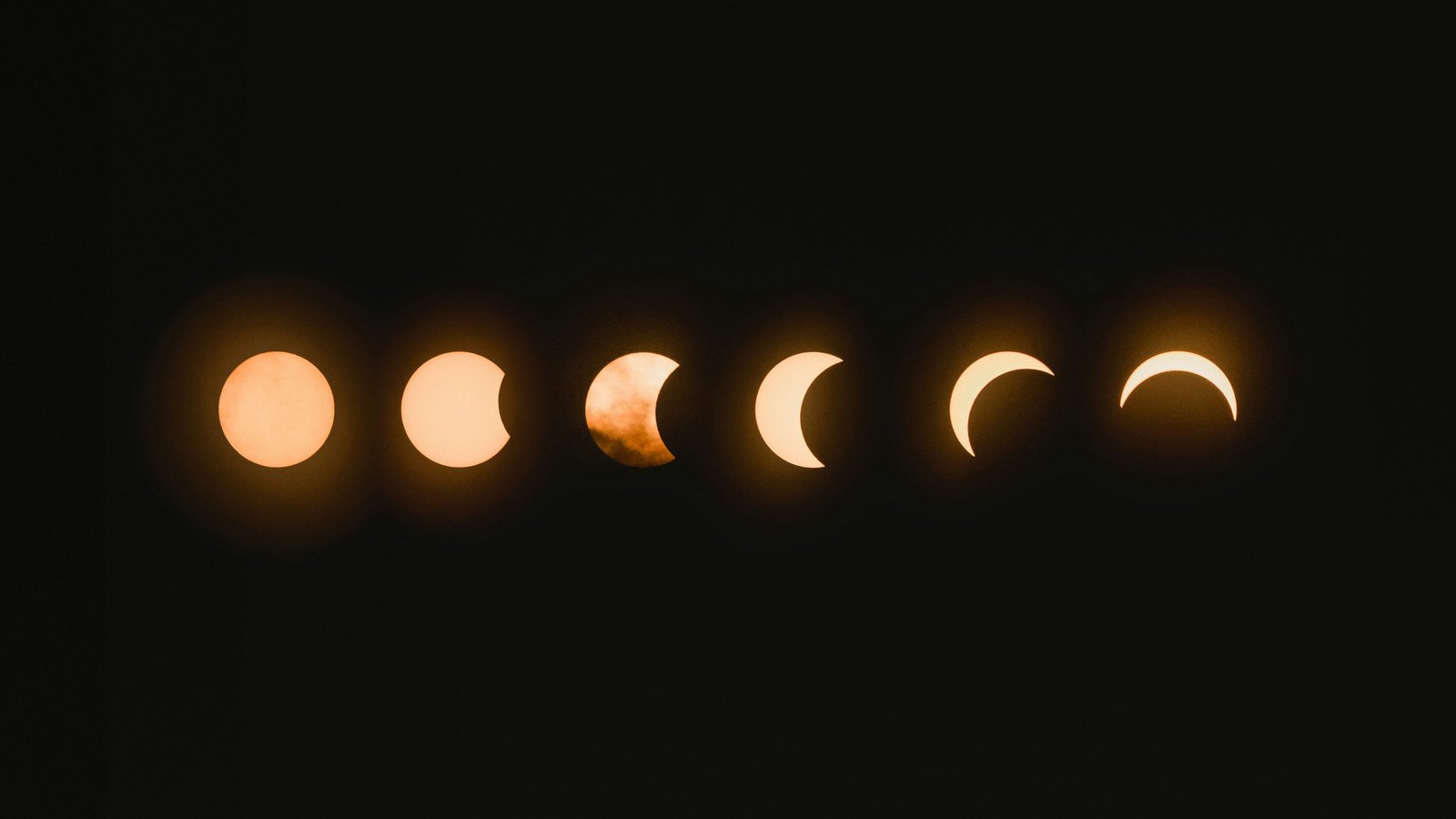
Venus, often called Earth's twin because of its similar size and composition, may have once had a moon that it eventually consumed, according to a recent astrophysics study. The research offers a potential explanation for one of the solar system's lingering mysteries: why Venus, unlike Earth and most other planets, has no natural satellite orbiting it today.
The study proposes that gravitational interactions over millions of years caused any moon Venus possessed to spiral inward until it collided with and merged into the planet itself. This would explain both the absence of a moon and certain unusual characteristics of Venus that have puzzled scientists.
What the Study Proposes
The research builds on existing models of planetary formation and orbital dynamics. Most planets in our solar system either retained their original moons or captured new ones through gravitational interactions. Venus and Mercury are the only terrestrial planets without moons, and Mercury's proximity to the Sun makes moon retention nearly impossible.
Venus, however, sits farther from the Sun and should theoretically have been able to keep a moon if one formed during the planet's early history. The new study suggests that tidal forces, the same gravitational interactions that cause Earth's ocean tides, could have gradually pulled a Venusian moon closer to the planet.
Over geological timescales, this inward spiral would have ended in a collision. The moon's material would have been absorbed into Venus, potentially contributing to the planet's thick atmosphere and extreme surface conditions.
Why Venus Is Different
Venus rotates extremely slowly compared to other planets, taking 243 Earth days to complete one rotation. It also rotates in the opposite direction to most planets in the solar system, a phenomenon known as retrograde rotation. These unusual characteristics have led scientists to propose various theories, including the possibility of a massive ancient impact.
The moon consumption hypothesis adds another layer to this discussion. If Venus absorbed a moon, the collision could have altered the planet's rotation or contributed to its current slow, backward spin. However, the study does not claim this as a confirmed explanation, only as a scenario consistent with what we observe today.
What This Means for Planetary Science
This research is part of ongoing efforts to understand how planets and their satellites evolve over billions of years. The early solar system was a chaotic environment where collisions, gravitational captures, and orbital changes were common. Many of the features we see in planets today are the result of these ancient processes.
Understanding what happened to Venus helps scientists refine models of planetary formation and predict what might occur in exoplanetary systems beyond our own. If moons can be consumed by their host planets under certain conditions, this could affect how we interpret observations of distant worlds.
The study also highlights how much remains unknown about our closest planetary neighbor. Despite being similar in size and composition to Earth, Venus has evolved into a vastly different world with surface temperatures hot enough to melt lead and atmospheric pressure 90 times that of Earth.
Limitations and Future Research
The moon consumption scenario is based on theoretical modeling rather than direct evidence. No remnants of a Venusian moon have been detected, and the planet's extreme surface conditions make it difficult to study its geological history in detail.
Future missions to Venus, including planned NASA and European Space Agency probes, may provide additional data that could support or challenge this hypothesis. These missions aim to study Venus's atmosphere, surface composition, and geological activity, all of which could offer clues about the planet's past.
For now, the study represents one possible explanation among several for why Venus lacks a moon. It demonstrates how scientists use indirect evidence and mathematical models to reconstruct events that occurred billions of years ago, even when direct observation is impossible.