FirstNarration
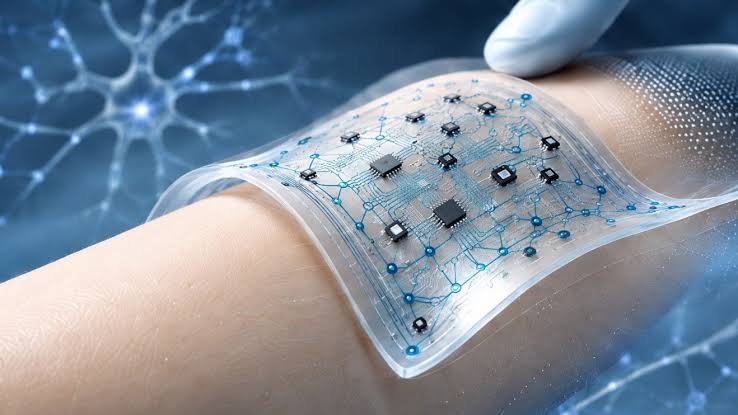
Researchers have developed an artificial intelligence system that can identify the underlying principles governing stretchable electronic materials, potentially accelerating the development of flexible devices for medical monitoring, wearable technology, and other applications.
The AI approach allows scientists to understand how these materials behave under different conditions without having to test every possible design through physical experiments, a process that has traditionally been time consuming and expensive.
How the System Works
The research team trained machine learning algorithms on existing data about stretchable electronic materials, teaching the system to recognise patterns in how these materials respond to stretching, bending, and other mechanical stresses. The AI then identified rules that predict material behaviour, rules that were not obvious from conventional analysis.
Stretchable electronics require materials that maintain electrical conductivity while being physically deformed. This combination has been difficult to achieve because most conductive materials are rigid, while flexible materials typically do not conduct electricity well. The challenge lies in finding the right structures and compositions that balance both properties.
The AI system appears to have identified relationships between material structure and performance that human researchers had not previously recognised, according to the available information. These insights could guide the design of new materials with specific properties tailored to particular applications.
Potential Applications
Stretchable electronics have significant potential in medical devices that need to conform to the human body. These include wearable health monitors that track heart rate, blood oxygen, or other vital signs continuously without restricting movement. Such devices could improve patient monitoring both in hospitals and at home.
Other applications include electronic skin for robotics, flexible displays, and sensors that can be integrated into clothing or directly onto irregular surfaces. The ability to design these materials more efficiently could reduce development time and costs for companies working in these areas.
The research also has implications for prosthetics and rehabilitation devices, where electronic components need to move naturally with the body while maintaining reliable performance.
Broader Context
This work represents part of a wider trend in materials science where artificial intelligence is being used to discover new materials and understand existing ones. Traditional materials development relies heavily on trial and error, with researchers testing numerous combinations before finding one that works. AI systems can analyse vast amounts of data to suggest promising candidates, narrowing the search space considerably.
Several research groups worldwide have been exploring similar approaches for different types of materials, including batteries, solar cells, and structural materials. The application to stretchable electronics adds another domain where computational methods may speed up innovation.
The specific details of which institutions conducted this research and where the findings were published were not confirmed in the available information. What is clear is that the methodology involves training algorithms on material property data and using those trained models to predict behaviour and identify design principles.
Limitations and Next Steps
While the AI system can identify patterns and suggest design rules, physical testing remains necessary to confirm predictions and validate new materials. The computational approach reduces but does not eliminate the need for laboratory work.
The accuracy of AI predictions depends on the quality and completeness of the training data. If the data does not cover certain material types or conditions, the system's predictions for those cases may be less reliable.
Researchers will likely focus on refining the AI models and expanding the range of materials they can analyse. Integrating these tools into industrial product development processes will require further validation and adaptation to specific manufacturing constraints.