 FirstNarration
The practice of purdah, the covering or seclusion of women in some Muslim societies, has long been presented as a religious requirement rooted in Islamic scripture. A closer examination of what the Quran actually prescribes versus what cultural tradition has imposed reveals a significant gap between text and practice.
What the Quran Actually Says
The Quran contains specific verses addressing modesty and dress for both men and women. The primary verses cited in discussions of women's covering appear in Surah An-Nur (24:31) and Surah Al-Ahzab (33:59). These verses instruct believing women to draw their coverings over their chests and to cast outer garments over themselves when going out.
The Arabic term "khimar" refers to a head covering, while "jilbab" refers to an outer garment or cloak. Notably, the Quran does not specify face covering or complete concealment. The text emphasizes modesty for both genders, with men instructed to lower their gaze and guard their modesty before similar instructions are given to women.
Cultural Practice Beyond Scripture
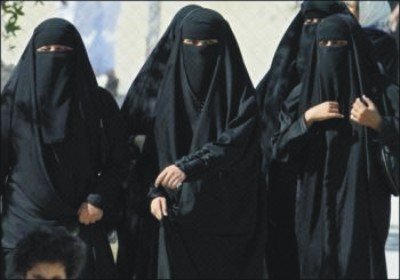
The extensive covering practices seen in various Muslim majority regions, including full face veiling and strict seclusion of women from public life, extend well beyond Quranic prescription. These practices emerged through centuries of cultural evolution, influenced by pre-Islamic customs, tribal traditions, and patriarchal social structures.
In pre-Islamic Arabia, Persia, and Byzantine territories, upper class women often practiced seclusion and veiling as markers of social status. These customs were absorbed into Islamic societies and gradually presented as religious obligations rather than cultural choices.
The interpretation and enforcement of covering practices vary dramatically across Muslim majority countries. Women in Indonesia, the world's largest Muslim population, typically wear headscarves but move freely in public and professional spaces. In contrast, some regions enforce far more restrictive practices, including full body covering and limitations on women's movement, education, and employment.
The Political Dimension
Purdah has become deeply politicized, used by both religious conservatives and secular authorities to assert control over women's bodies and social participation. In some contexts, enforcing strict covering serves as a visible marker of religious or political identity. Governments and religious authorities have alternately mandated, banned, or regulated women's dress as a tool of political control.
The practice also intersects with debates over women's rights, religious freedom, and state authority. Women themselves hold diverse views, with some seeing covering as a personal religious choice and others viewing strict purdah requirements as oppressive impositions that limit their participation in education, employment, and public life.
Scholarly Debate and Reform Movements
Islamic scholars have long debated the extent of covering required by religious text versus cultural tradition. Progressive Islamic scholars argue that the Quran's emphasis is on modesty and dignity rather than specific garments, and that many restrictive practices represent cultural patriarchy rather than divine command.
Reform movements within Muslim communities increasingly distinguish between core religious principles and cultural accretions. These movements point out that the Prophet Muhammad's wives and early Muslim women participated actively in social, economic, and even military affairs, suggesting that extreme seclusion was not the original Islamic model.
Implications for Muslim Societies
The distinction between Quranic instruction and cultural practice matters significantly for women's rights and social participation across Muslim majority countries. When extensive covering and seclusion are presented as religious obligations rather than cultural choices, women face religious and social pressure that limits their access to education, employment, healthcare, and public participation.
In Pakistan, debates over women's dress and public participation reflect this tension between religious interpretation and cultural practice. While the country's constitution guarantees equal rights, cultural expectations around purdah often constrain women's opportunities. Understanding what the Quran actually requires versus what tradition imposes could inform more nuanced discussions about women's rights within an Islamic framework.
The conversation around purdah ultimately raises fundamental questions about who has authority to interpret religious texts, how cultural practices become conflated with religious requirements, and how women's autonomy and dignity can be respected within diverse interpretations of Islamic tradition.