FirstNarration
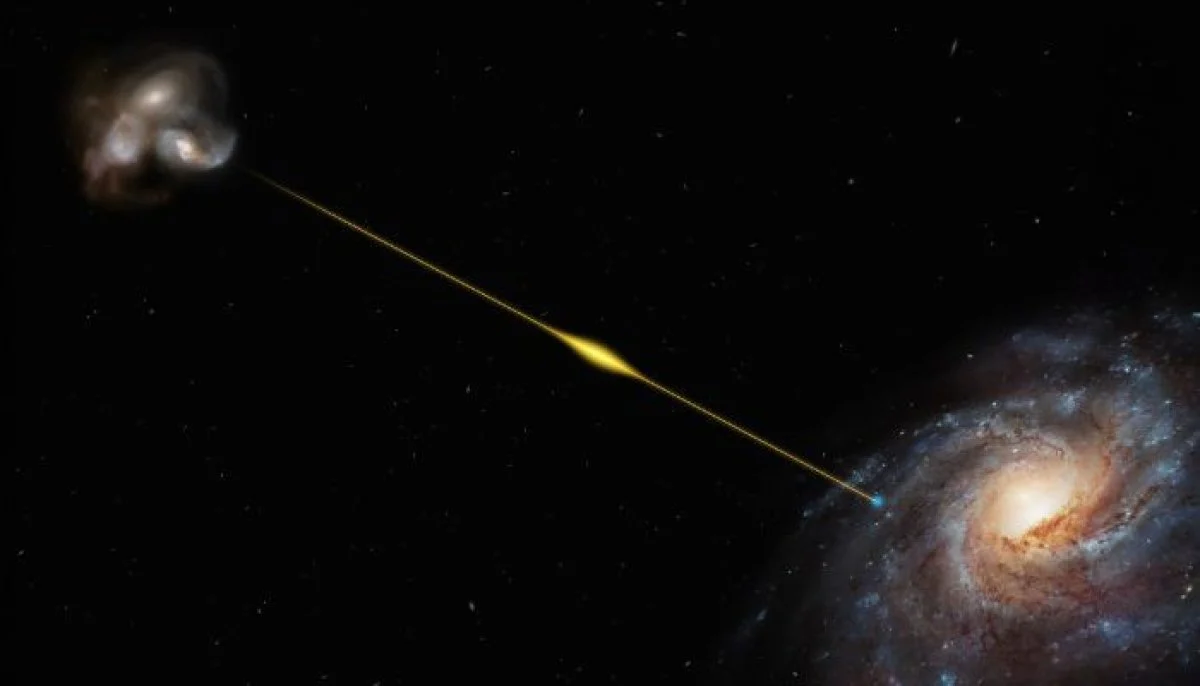
China's Five-hundred-meter Aperture Spherical radio Telescope (FAST) has produced the most comprehensive atlas yet of neutral atomic hydrogen across the universe, a finding that challenges existing explanations for why star formation has been slowing down across cosmic time.
The new data reveals a significant mismatch: while star formation across the cosmos has declined by approximately 59 percent over the past 4.5 billion years, the universe's reservoir of neutral atomic hydrogen the raw material from which stars form has decreased by only 11 to 26 percent during the same period. This discrepancy undermines the prevailing theory that galaxies are simply running out of fuel.
What the Atlas Shows
FAST's observations have mapped neutral hydrogen gas bodies across vast stretches of the universe, creating what researchers describe as the largest catalog of its kind. Neutral atomic hydrogen, often designated as HI by astronomers, represents the primary ingredient for star formation in galaxies.
The telescope's sensitivity and collecting area have enabled it to detect hydrogen emissions from distant galaxies with unprecedented detail, tracking both the quantity and distribution of this cosmic fuel reservoir over billions of years of cosmic history.
The Star Formation Puzzle
Astronomers have long known that the universe's rate of star formation peaked roughly 10 billion years ago and has been declining ever since. The standard explanation held that galaxies were progressively depleting their gas supplies, leaving less material available to form new stars.
FAST's findings complicate this narrative. If the hydrogen reservoir has declined by at most 26 percent while star formation has dropped by 59 percent, something else must be preventing galaxies from converting their available gas into stars as efficiently as they once did.
The data suggests that the fuel remains relatively abundant, but the conditions or mechanisms that trigger star formation have changed. Potential explanations include changes in gas temperature, density, or the influence of supermassive black holes and stellar feedback that can heat or expel gas from galaxies.
FAST's Capabilities
Located in Guizhou Province, FAST is the world's largest filled-aperture radio telescope. Its 500-meter dish provides exceptional sensitivity to the 21-centimeter wavelength radio emission produced by neutral hydrogen, making it uniquely suited for this type of cosmic survey.
The telescope began full operations in 2020 and has since contributed to multiple astronomical discoveries, including the detection of fast radio bursts and millisecond pulsars. This hydrogen atlas represents one of its most ambitious survey projects to date.
Implications for Cosmic Evolution
The findings have immediate implications for models of galaxy evolution and cosmic structure formation. If galaxies retain substantial hydrogen reserves but form stars at declining rates, researchers will need to revise their understanding of what regulates star formation on cosmic scales.
The work also provides crucial observational constraints for simulations of galaxy evolution. Theoretical models will need to account for mechanisms that suppress star formation without requiring the wholesale loss of neutral gas from galaxies.
Future observations, potentially including data from next-generation radio telescopes, will be needed to determine which physical processes are responsible for this efficiency decline. Candidates include environmental effects in galaxy clusters, the role of dark matter halos in regulating gas cooling, and the cumulative impact of stellar winds and supernova explosions over cosmic time.