 FirstNarration
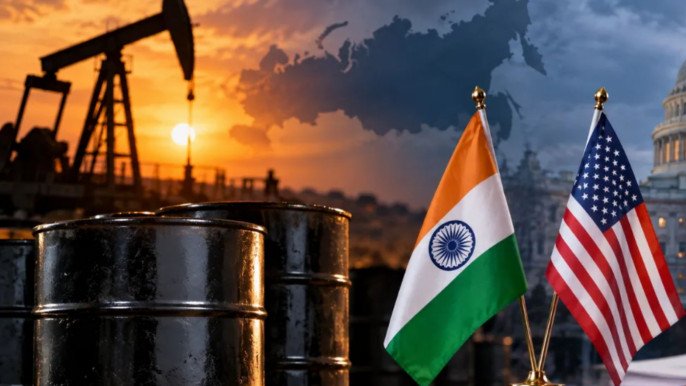
India has warned that new American tariffs targeting Russian oil imports could damage bilateral relations between New Delhi and Washington, while vowing to protect its energy security interests regardless of external pressure.
The statement marks a significant diplomatic pushback against reported US plans to impose trade restrictions on countries purchasing Russian crude oil, a move that would directly affect India, which has become one of the largest buyers of discounted Russian energy since the Ukraine conflict began.
What India Has Said
Indian officials have made clear that the country will prioritise its energy security needs over geopolitical considerations. The warning to the United States signals that New Delhi views any attempt to restrict its oil purchasing decisions as an unacceptable interference in sovereign policy.
India has consistently maintained that its energy purchases are driven by the needs of its population and economy, not by alignment with any particular geopolitical bloc. The country has argued that it must secure affordable energy to sustain economic growth and meet the needs of its 1.4 billion citizens.
Background on Russian Oil Imports
Since Russia's invasion of Ukraine in February 2022, India has dramatically increased its purchases of Russian crude oil. The oil is sold at a significant discount compared to global benchmark prices, offering substantial savings for India's large refining sector.
Before the Ukraine conflict, Russia accounted for a relatively small portion of India's oil imports. That share has since grown substantially, with Russian crude becoming one of India's primary sources of imported energy. India is now among the top buyers of Russian oil globally, alongside China.
The increased purchases have drawn criticism from some Western countries, which view them as undermining sanctions and providing Russia with crucial revenue. India has consistently rejected this characterisation, pointing out that it has not violated any international sanctions and that many European countries continued purchasing Russian energy well into the conflict.
Why This Matters
The dispute highlights a growing tension between India's strategic partnership with the United States and its practical energy needs. India and the US have deepened defence and technology cooperation in recent years, particularly through frameworks like the Quad alliance, which also includes Japan and Australia.
However, India has maintained what it calls strategic autonomy in foreign policy, refusing to align completely with Western positions on Russia. This has created friction, particularly as the US and European allies have sought to isolate Russia economically.
For India, energy security is a matter of national priority. The country imports the vast majority of its oil and must balance affordability with reliability of supply. Russian oil has provided both, making it difficult for New Delhi to abandon the supply regardless of diplomatic pressure.
Any US tariffs on countries importing Russian oil would force India to choose between higher energy costs, which could slow economic growth and increase inflation, or accepting trade penalties from its most important strategic partner. Neither option is attractive, which explains the strength of India's warning.
Broader Regional Implications
The situation also carries implications for South Asia more broadly. If the US imposes tariffs on India over Russian oil, it could reshape regional trade dynamics and potentially affect other countries in the region that maintain economic ties with both Washington and New Delhi.
Pakistan, which faces its own severe energy challenges, has watched India's access to discounted Russian oil with interest. While Pakistan has explored limited purchases of Russian energy, its economic constraints and different geopolitical positioning have prevented it from replicating India's approach at scale.
The dispute underscores how the Ukraine conflict continues to create difficult choices for countries outside the immediate theatre of war, particularly large developing economies that prioritise growth and energy access over alignment with Western sanctions regimes.
What Happens Next
It remains unclear whether the United States will proceed with tariffs targeting Russian oil buyers. Such a move would affect not only India but potentially other major economies, including China, making it a significant escalation in the economic dimension of the Ukraine conflict.
India's warning suggests it is prepared to push back strongly against any such measures. How the US responds, and whether it is willing to risk damaging relations with a key strategic partner over energy purchases, will be closely watched in capitals across Asia and beyond.