FirstNarration
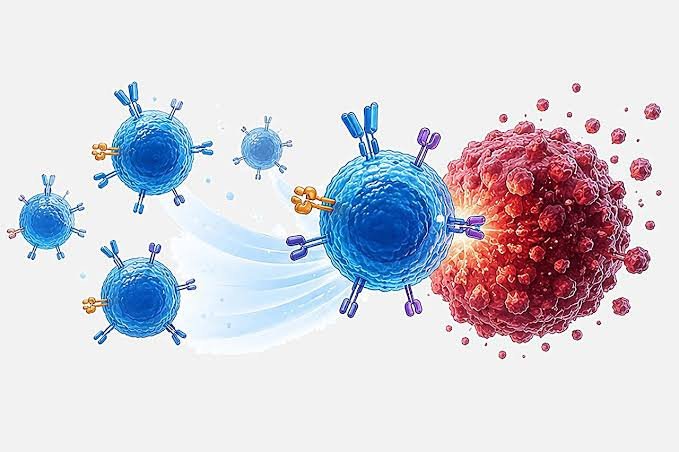
Scientists have identified a gene that appears to act as a brake on some of the immune system's most important disease-fighting cells, potentially opening a new research pathway for chronic hepatitis B and cancer treatments.
A research team led by Professor Zhou Xuyu at the Institute of Microbiology of the Chinese Academy of Sciences (CAS), working with researchers from Beijing Ditan Hospital and Capital Medical University, identified ANKRD11 as a key regulator of CD8+ T cells.
These immune cells play an important role in finding and attacking virus-infected and cancerous cells.
The researchers found that ANKRD11 reduces T-cell activity by suppressing the Activator Protein 1 (AP-1) signaling pathway, which normally helps CD8+ T cells mount effective responses against infections and tumors.
The findings were published in the journal Nature Immunology.
Why Chronic Hepatitis B Is Difficult for the Immune System
Hepatitis B virus (HBV) remains a major global health challenge.
According to the research summary, approximately 296 million people worldwide are infected with HBV.
Chronic infection can lead to serious liver diseases, including cirrhosis and liver cancer.
One reason chronic HBV is so difficult for the immune system to control involves CD8+ T cells.
Under normal circumstances, these cells recognize and attack infected cells. During chronic HBV infection, however, they can become weakened and lose their ability to multiply effectively.
The liver environment can further suppress immune activity, potentially reducing the effectiveness of some immune-based treatments.
Researchers have therefore been searching for ways to restore stronger T-cell responses.
Scientists Identify ANKRD11 as an Immune 'Brake'
The researchers used advanced genetic techniques to investigate genes that could influence T-cell responses during chronic hepatitis B infection.
Using a whole-genome Clustered Regularly Interspaced Short Palindromic Repeats and CRISPR-associated protein 9 (CRISPR-Cas9) screening approach, the team examined potential genetic regulators of T-cell dysfunction.
ANKRD11 emerged as a particularly promising candidate.
The gene had not previously been recognized for this role, but the researchers found evidence that it could regulate how genes are activated or suppressed inside immune cells.
Removing ANKRD11 Made T Cells More Powerful
The researchers then investigated what happened when Ankrd11 was specifically deleted from T cells.
Importantly, removing it did not disrupt normal T-cell development.
Instead, the modified cells became significantly better at fighting infection.
They produced higher levels of important immune molecules and showed an increased ability to attack both infected and cancerous cells.
Further analysis found that genes associated with T-cell function became easier to activate when ANKRD11 was absent.
The results suggest that ANKRD11 effectively functions as a biological brake that limits T-cell activity.
The modified cells were also more resistant to signals that would normally suppress immune responses.
Researchers Test the Approach Against Hepatitis B
The team then tested the findings in disease models.
In mice with hepatitis B virus, removing Ankrd11 from T cells resulted in more active immune cells inside the liver.
The strengthened immune response helped clear the virus and improved disease outcomes.
That result is particularly significant because chronic hepatitis B is characterized partly by the immune system's inability to eliminate infected cells effectively.
Restoring T-cell activity could therefore represent a potential new direction for future therapeutic research.
However, these findings come from experimental models and do not establish that blocking ANKRD11 is already a safe or effective treatment for people.
The Approach Also Showed Potential Against Cancer
The researchers did not limit their investigation to hepatitis B.
They also tested ANKRD11-deficient T cells in another viral model and a cancer model.
The modified T cells demonstrated stronger antiviral activity and were better able to shrink tumors — including in experimental situations where other treatments had failed.
Combining the approach with existing therapies produced an even stronger treatment effect in the models.
This raises the possibility that targeting ANKRD11 could eventually be investigated not only as a strategy against chronic viral infection but also as a way of strengthening cancer immunotherapy.
Why CD8+ T Cells Matter in Cancer
CD8+ T cells are a central part of the body's immune defense.
Sometimes described as cytotoxic or "killer" T cells, they can recognize abnormal cells and destroy them.
Cancer, however, can create conditions that suppress these immune responses.
This is one reason modern cancer immunotherapies often attempt to remove biological restrictions that prevent immune cells from attacking tumors effectively.
The ANKRD11 findings suggest researchers may have identified another mechanism contributing to this suppression.
If scientists can safely manipulate that mechanism, it could potentially help T cells maintain stronger activity against tumors.
Could ANKRD11 Become a Treatment Target?
The research identifies ANKRD11 as a potential therapeutic target, but significant additional work would be required before the approach could become a treatment.
The current findings show that removing Ankrd11 can strengthen T-cell responses in experimental disease models.
That does not mean patients with hepatitis B or cancer can currently receive an ANKRD11-targeting therapy.
Future research would need to establish how the pathway could be targeted safely, whether similar benefits occur in humans and whether manipulating ANKRD11 creates unintended effects elsewhere in the body.
Researchers would also need to determine which patients and cancer types might benefit most.
Potential for Combination Therapy
One particularly interesting aspect of the study is the apparent benefit of combining ANKRD11 targeting with existing treatments.
The researchers reported stronger effects when the experimental approach was combined with other therapies.
Combination treatment has become an important strategy in immunotherapy because cancers and chronic infections can use several mechanisms simultaneously to weaken immune responses.
Removing one biological brake may help, but targeting multiple pathways could potentially produce a stronger response.
ANKRD11 could therefore be investigated as part of a broader therapeutic strategy rather than necessarily as a standalone treatment.
What Happens Next?
The study provides evidence that ANKRD11 plays an important role in limiting T-cell responses during chronic infection and cancer.
Researchers now have to determine whether those experimental findings can eventually be translated into safe treatments for humans.
The study's authors conclude that targeting ANKRD11 could offer a potential strategy for strengthening the body's immune response against chronic hepatitis B and cancer, particularly when existing therapies are insufficient.
For now, the discovery should be viewed as a promising preclinical research finding rather than a new treatment.
But by identifying another mechanism that restricts the immune system's ability to fight persistent infections and tumors, the research could provide scientists with a new target in the continuing effort to make T-cell therapies more effective.