FirstNarration
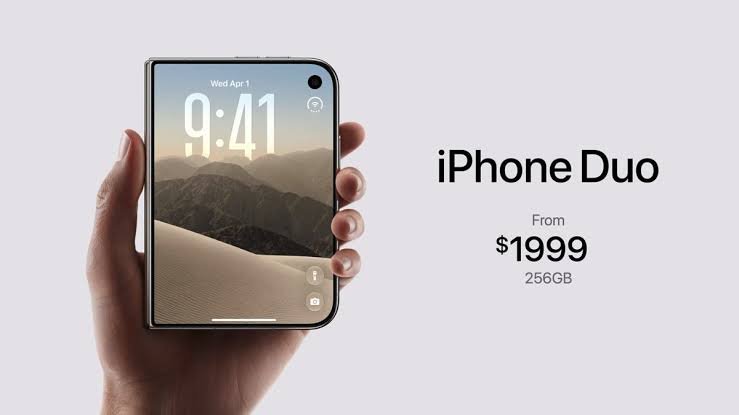
Apple has entered the foldable smartphone market with the iPhone Duo, a passport-shaped device priced at £1,999 in the UK (approximately $1,999 in the US). The launch represents one of the first major product decisions under Apple's new chief executive, arriving years after competitors Samsung, Huawei, and Motorola established the category.
The device was unveiled at Apple's 2026 event alongside the iPhone 18 Pro and additional artificial intelligence features, but the folding phone drew the most attention as Apple's belated answer to a market segment it previously avoided.
What Makes the iPhone Duo Different
The iPhone Duo adopts what the industry calls a "passport" form factor: it folds horizontally to create a roughly square device when opened, unlike Samsung's Galaxy Z Fold series which unfolds vertically into a taller rectangle. This design choice gives the Duo a more compact profile when closed, though it also means a different aspect ratio for apps and content.
Apple has not disclosed full technical specifications publicly, but the device is understood to feature the company's latest processor, integration with its AI platform, and a hinge mechanism the company claims is more durable than earlier foldable designs. No independent durability testing has been published yet.
The price point places it at the top end of the foldable market. Samsung's Galaxy Z Fold8, its direct competitor, has been positioned in a similar range, making this a premium-tier product even within an already expensive category.
Why Apple Waited This Long
Foldable phones have been commercially available since 2019, when Samsung launched the original Galaxy Fold. Since then, the technology has matured considerably: screens are more durable, hinges more reliable, and software better adapted to the format. Yet adoption remains limited, with foldables accounting for a small fraction of global smartphone sales.
Apple's decision to wait allowed the company to avoid the early reliability problems that plagued first-generation foldables, including screen failures and hinge issues. It also meant Apple could study what worked and what didn't in competitors' designs. The trade-off is entering a market where Samsung, in particular, has built a loyal base and refined its hardware over multiple generations.
The timing under new leadership is notable. Launching a new product category carries risk: if the iPhone Duo succeeds, it validates the strategic direction; if it struggles, it becomes an early setback for the new executive team.
The Competitive Landscape
Direct comparisons with the Galaxy Z Fold8 highlight both similarities and differences. Both devices target users willing to pay a significant premium for a larger screen in a pocketable form. Both rely on app ecosystems that have only partially adapted to foldable displays, meaning some software still doesn't take full advantage of the format.
Where Apple may have an advantage is in ecosystem integration. iPhone users already invested in other Apple products (iPads, Macs, AirPods) might find the Duo more compelling than switching to Samsung. Where Samsung has an edge is experience: eight generations of foldable hardware have taught the company what breaks and how to fix it.
Chinese manufacturers including Huawei and Xiaomi also produce foldables, some at lower price points, though their availability outside China is limited by various factors including US trade restrictions and software compatibility.
What This Means for the Market
Apple's entry is unlikely to make foldables mainstream overnight. The price alone puts the device out of reach for most buyers, and the benefits of a folding screen remain debatable for many use cases. But Apple's participation does lend legitimacy to the category and may accelerate app developers' willingness to optimise software for foldable displays.
For Pakistan specifically, the £1,999 price translates to well over PKR 700,000 before taxes and import duties, placing it firmly in the luxury segment. Official Apple availability in Pakistan remains limited, meaning most units would arrive through grey market channels at even higher markups. The practical impact on the local market will likely be minimal in volume terms, though the device may appear among high-end users and as a status symbol.
The real test will be whether Apple can demonstrate a use case for foldables that feels essential rather than novel. Larger screens are useful for multitasking, media consumption, and reading, but whether that justifies the cost, added thickness, and potential durability concerns is a question every foldable maker still faces. Apple is betting it has an answer. The market will decide if it's right.